
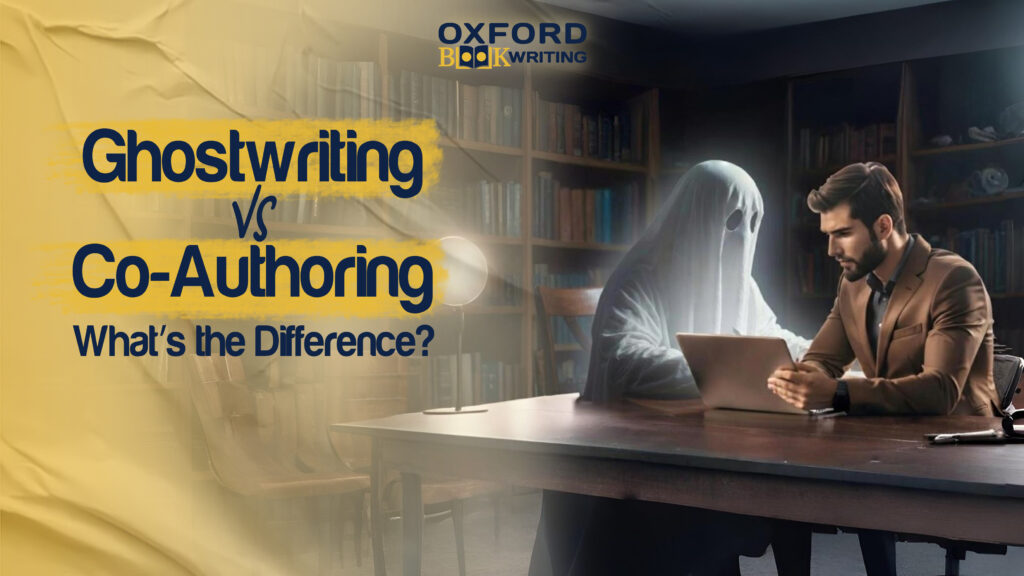
Most would-be writers have good ideas of the book they want to write but do not know how to transform the ideas into a good writing. Professional writing support is extremely important in such cases. Ghostwriting and co-authoring are two of the most widespread options.
Nevertheless, new writers always have the question about the difference between ghostwriting and co-authoring. The two methods assist to convert ideas into completed books although the roles, tasks, ownership of creativity and writing credit are highly different.
It is important to know the issue of ghostwriting vs co-authoring before venturing into any book project. In this guide, we are going to discuss the functionality of each of the options, the ghostwriter vs co-author dynamic, and guide you to choose the best collaboration style to work on your book.
What Is Ghostwriting?
Ghostwriting is a professional writing business in which the writer prepares an item and it is published under the name of another person. The individual that employed the writer is accorded all the credits as the writer of the book.
As described in ghostwriting services, the ghostwriter is usually involved in close collaboration with the author in order to replicate their character, thoughts, and vision. The ghostwriter can interview, carry out research, draw outlines and write the manuscript.
What Does a Ghostwriter Do?
The tasks done by a ghostwriter typically include:
- Interview the author
- Arrange ideas in a logical format of the manuscript
- Conduct research when necessary
- Write chapters according to the instructions of the author
- Make amendments based on feedback
In such a setup, the ghostwriter performs most of the writing but remains anonymous. The book is fully published in the name of the author.
Memoirs, business books as well as novels are also ghostwritten. It can particularly be useful to people who do not have the time or writing skills necessary to produce a full manuscript, but have an idea they think is worthwhile.
What Is Co-Authoring?
To get the co-authoring vs ghostwriting idea, it will first be good to know the co-authoring meaning when it comes to publishing.
Co-authoring is a book writing collaboration where two or more writers work together to create a book and share credit for the final product.
What Does a Co-Author Do?
A co-author is actively engaged in:
- Idea development
- Story or chapter writing
- Research and editing
- Structuring the narrative
Co-authors are given credit on the book cover and byline unlike ghostwriters. The two authors have their contribution of creativity and most of the time they have equal contribution to the manuscript.
This kind of author partnership is effective in cases where the two authors come with distinct strengths to the venture. An example is where one of the co-authors can offer subject knowledge and the other can be specialized in story-telling.
Key Differences Between Ghostwriting & Co-Authoring
To find out what is the difference between ghostwriting and co-authoring, it is necessary to examine several factors.
1. Creative Contribution
The initial significant dissimilarity is the contribution of writing.
Ghostwriting involves the ghostwriter normally performing the ideas of the writer. The director is the author and the scriptwriter is the ghost writer.
In a collaboration, there is a kind of sharing of the story between the authors. This is through brainstorming of ideas, writing of parts of the book, and adding creativity to the final product.
2. Visibility and Credit
Among the most significant distinctions between arranging ghostwriter vs co-author is recognition.
With ghostwriting:
- All the credit goes to the author.
- The ghostwriter is nonidentified.
With co-authoring:
- Both writers receive public recognition
- Both of the names are on the book cover or byline.
Such a difference tends to affect the preferred method of an author.
3. Ownership and Rights
Innovative ownership is also different under the two setups.
Under ghostwriting, the writer is usually the owner of the rights to the manuscript. The ghostwriter receives payment of their services, but does not own the content.
When it comes to co-authoring rights can be divided as per the contract. This may involve joint copyright or shared decision on publishing.
4. Payment Structure
Payment models also differ.
Ghostwriters typically receive a lump sum payment. After the money is paid, the author retains the manuscript.
Co-authors can get their share in the form of royalties or share of profits, as opposed to advance payments. Others are an advance payment and a royalty participation.
Understanding these contract differences between ghostwriters and co-authors is essential before entering a writing agreement.
5. Collaboration Style
Ghostwriting is usually an outsourced activity. Ideas are offered by the author and the bulk of the work is done by the ghostwriter.
Co-authoring on the other hand is a real creative collaboration. The two authors make contributions in the course of writing.
Such a difference makes the process of co-authoring vs ghostwriting quite dissimilar to authors.
6. Control Over the Work
Control is another important variable in the difference in the writing process.
Under ghostwriting, the manuscript is under the complete creative control of the author. The ghostwriter is a direction follower.
Decisions made in creativity are shared. The two authors shape the story, form and the course of the book.
Pros and Cons of Ghostwriting
Pros
Ghostwriting has a number of benefits.
First, it saves time. An author is able to work on business, marketing, or any other business whereas a professional writer finishes the writing.
Second, ghostwriters are professionals in writing, and their presence enhances the quality of the book in general.
Third, the author is given full credit of the final work.
Lastly, ghostwriting can help to write a book at a faster rate.
Cons
Nevertheless, there are also certain limitations of ghostwriting.
The authors should give proper guidance and concept towards the project.
Also, most ghostwriting jobs demand a larger initial investment than co-authoring.
Pros and Cons of Co-Authoring
Pros
There are various advantages of co-authoring.
Both authors are creative and this may formulate more powerful concepts and viewpoints.
Teamwork tends to result in further research and livelier storytelling.
Co-authoring in certain instances might have cheaper initial outlay costs since the payments can be in form of Royalties.
Cons
Nonetheless, there are also difficulties with co-authoring.
The two authors cannot be deprived of credit and recognition.
There might be creative disputes in the process of writing.
The process of making the decision may be more time-consuming, as both authors have to reach a consensus on important factors.
It may also require royalties to be shared.
When Should You Hire a Ghostwriter vs Co-Author?
Whether to use ghostwriting vs co-authoring is really a matter of how you want to achieve as an author.
Choose a Ghostwriter If:
- You come up with good ideas and little time to write.
- Wish to have all the credit of the book.
- You would like a done-for-you writing company.
- You wish to have a faster manuscript completion.
Choose a Co-Author If:
- You desire an innovative alliance.
- You are quite happy to share credit.
- Desire someone to assist in idea developing.
- You like cooperative writing.
Understanding when to hire a ghostwriter vs co-author can help you select the right approach for your project.
How to Decide What’s Best for Your Project
The choice between ghostwriting and co-authoring is a matter of consideration of a number of issues.
Assess Your Writing Ability
You can use a ghostwriter in case you have great ideas yet you have difficulty writing.
Specify the Degree of Control You Prefer
Ghostwriting is normally preferred by authors who want complete creative control.
Individuals who are willing to work together can choose to be co-authors.
Assess Schedule and Budgeting
Ghostwriting is more expensive in start-up costs but delivers quicker.
Co-authorship can be done with profits shared rather than advance payments.
Consider Publishing Goals
Ghostwriting is more appropriate in case you want to be the only author.
Co-authoring can be a better option in case you want to develop a team project.
Frequently Asked Questions
Is a co-author the same as a ghostwriter?
No. A ghostwriter writes the manuscript but does not receive public credit, while a co-author shares both writing responsibilities and authorship.
Who gets credit in a ghostwriting arrangement?
In most ghostwriting agreements, the client receives full credit as the author.
Do ghostwriters get royalties?
Typically, ghostwriters are paid a fixed fee and do not receive royalties unless specified in the contract.
Is co-authoring legally binding?
Yes. Co-authoring agreements are usually governed by contracts that define rights, responsibilities, and revenue sharing.
How do I choose between a ghostwriter and co-author?
The decision depends on your goals, budget, timeline, and whether you want full credit or a collaborative partnership.
Can a ghostwriter become a co-author?
In some cases, yes. If both parties agree, a ghostwriter may receive co-author credit for their contribution.
Final Thoughts
Ghostwriting vs co-authoring is the question that any author has to know when the author decides to write a book. Though the two methods assist in translating ideas into manuscripts, they vary in the level of creativity, credit, ownership and the style of collaboration.
Ghostwriting provides a more straightforward approach where the author retains all the credit and control and co-authoring is a creative partnership jointly authored.
This is because the optimal choice would largely depend on your intention of writing, the time frame, and the level of cooperation you would like.
In case you require the professional services, professional writers can assist you in materializing your vision.
Need help deciding between ghostwriting and co-authoring?OxfordBookWriting provides seasoned writers that can assist your project either by ghostwriting your project or by writing collaboratively. Get in touch with us today, and have a free consultation with us.